Your office might be wasting half its space
Most businesses don't use their desks every day. Here's what to check and whether you should change anything.
A common finding in workplace studies is that many offices sit empty on any given day. The question for a small business owner is whether that matters to you, and if so, what to do about it. The short answer: it depends on your setup and your lease.
Key facts
- Studies suggest that up to 40 percent of office desk space goes unused on a typical day.
- Flexible seating arrangements, where employees pick a different desk based on their task, can reduce real estate costs by 30 to 50 percent.
- Offices designed with employee input on workspace needs show productivity gains of up to 38 percent.
- Designated quiet zones can reduce noise distractions by up to 40 percent.
Does this apply to your business?
If you lease office space and pay by the square foot, unused desks cost you money every month. If you own your building, the waste is less immediate but still real. The math changes if your team works hybrid—some days in, some days out—or if people work in the field. A roofing crew or salon staff working client-side won't fill a desk every day anyway. A back-office team in one location will.
The strategies discussed assume a traditional office with assigned desks. If that's not you, skim ahead.
What to measure before you change anything
Start by asking a simple question: which desks are actually used? Walk through your office on a random Tuesday and Wednesday. Count empty chairs. Ask your team when they're in and when they work from home or on site. If your lease is up for renewal, this matters. If you're locked in for three more years, it matters less.
Check your meeting rooms the same way. Double bookings and oversized spaces waste time and money. If you have a conference table that seats twelve but your team of four books it every morning, that's a signal.
Talk to your employees about what they actually need. Some people focus better with noise and people around. Others need quiet. Some need a desk; others need a table and a wall to write on. Their answer tells you whether your current layout matches how they work.
What changes might make sense
If the data shows real waste, you have options. Hot desking—letting people choose a desk based on their task that day—works for some teams. It requires booking software so people don't collide, and it assumes your team is comfortable without a personal workspace. Some people hate it. Some thrive.
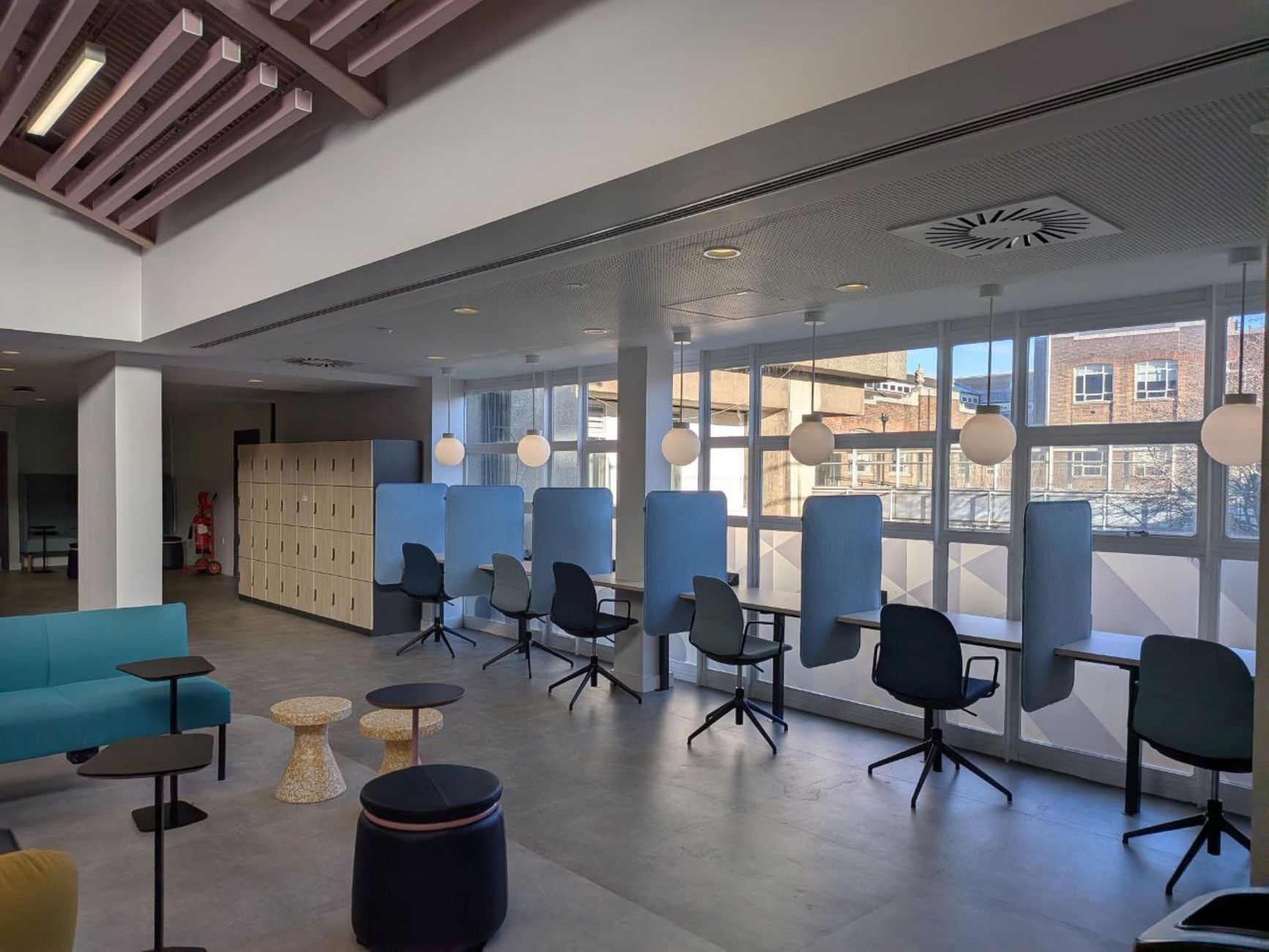
Moveable partitions and modular furniture let you reconfigure your space without a renovation. A wall that slides creates a quiet zone in the morning and opens into a collaboration space by afternoon. That flexibility costs money upfront but can adapt as your team grows or shrinks.
Designated quiet areas for focused work alongside collaboration zones address different work styles in one space. Clear signage matters—people need to know where to go.
The honest assessment
These strategies work best for larger teams with flexible schedules and hybrid work. If you're a small salon, restaurant, or service business, your space constraint is usually different—you need room for clients or customers, not unused desks. If you're a small office with a tight team that shows up most days, the gains from reorganizing might not justify the disruption.
The real value is in asking the question. Measure your space utilization, listen to your team, and decide whether the waste is worth fixing. For some businesses, it's a quick win. For others, it's not your problem.
Sources
- 10 Tips to Optimize Office Space Efficiently - Small Business Trends, November 9, 2026
They did the reporting. The writing and the opinions here are ours.
Questions people ask about this
How much office space actually goes unused?
Studies indicate that up to 40 percent of office desk space sits empty on any given day. The percentage varies by business, team size, and whether employees work hybrid schedules or in the field.
Can flexible seating really save money on rent?
Hot desking and flexible seating arrangements can reduce real estate costs by 30 to 50 percent, according to workplace studies. The savings depend on your lease structure and whether your team can adapt to shared desks.
Does rearranging the office actually make people more productive?
Offices designed based on employee feedback about their workspace needs show productivity gains of up to 38 percent. Results vary by team and work style.
What's the first step to optimize office space?
Start by measuring how your space is actually used. Count empty desks on different days, check meeting room bookings, and ask your team what they need. Data guides better decisions than guessing.
Do I need to buy new furniture to optimize my office?
Not necessarily. Moveable partitions and modular furniture help, but the first step is understanding your current usage. Some changes cost little or nothing.
Does this apply to small businesses?
It depends on your setup. If you lease office space and pay by the square foot, unused desks cost you money. If your team works in the field or with clients, the waste pattern is different and these strategies may not apply.
This piece is about 10 Tips to Optimize Office Space Efficiently, published by Small Business Trends. Go read the original; the opinions here are ours and the reporting is theirs.